Get your swimming pool or pool house structurally designed
For homeowners planning an in-ground pool, indoor pool or pool house. Describe your site and compare quotes from structural engineers for the pool shell, retaining walls and the building around it.
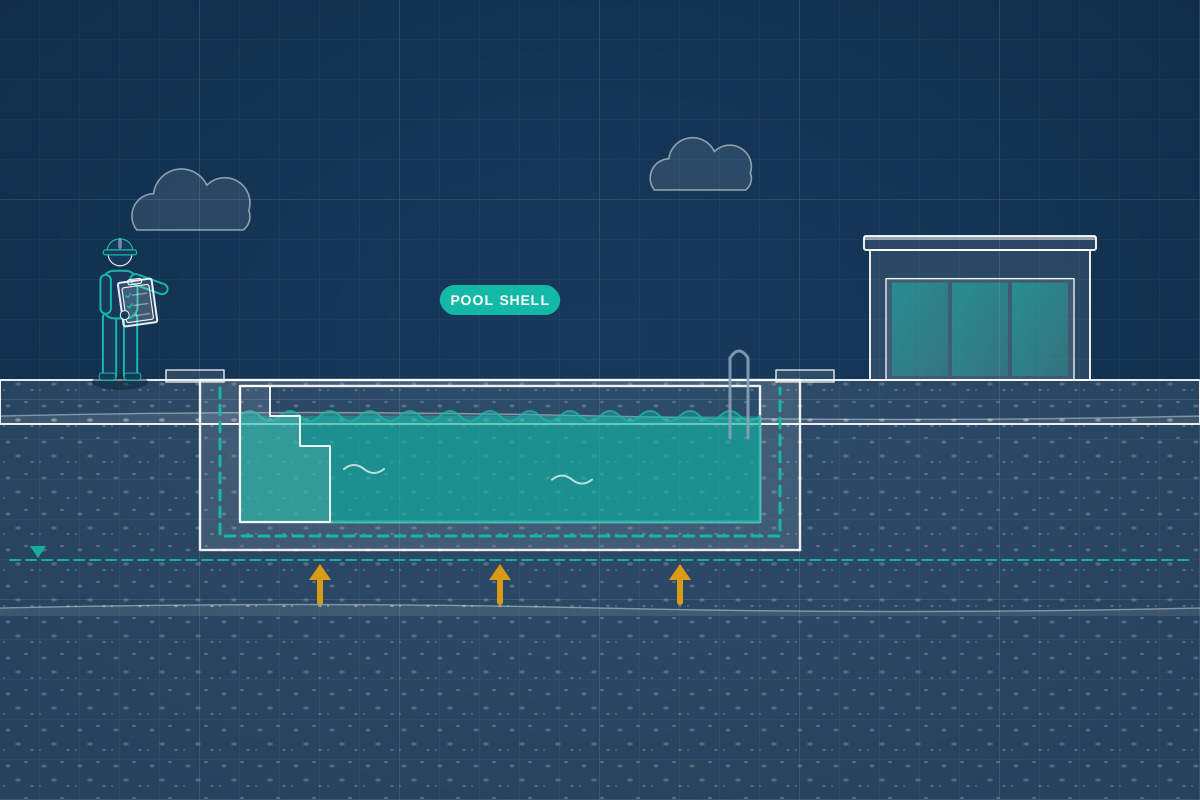
A swimming pool is a heavy, watertight structure that has to cope with the weight of the water, pressure from the soil around it and, when empty, the risk of groundwater pushing it upwards. A structural engineer designs the pool shell, usually in reinforced concrete, the surrounding retaining walls and slab, and the structure of any pool house or plant room (the room for the pump and filters). For an indoor pool they also consider the humid air, which affects the materials you can use. The dig is deep and often close to your house, so the engineer also advises on how its sides are supported and in what order the work is done. All of this should be settled before any digging starts.
How a professional can help
- Designing the pool shell: They design the floor and walls of the pool for the water load, the soil pressure outside and the loads from the surround, whether it is reinforced concrete, sprayed concrete or a manufactured shell set into the ground.
- Groundwater and emptying: High groundwater can lift an empty pool. They assess the risk, using your ground investigation where there is one, and design for it, or set out how and when the pool can safely be emptied.
- Excavation and nearby structures: They plan how the sides of the dig are supported and how close the work can be to the house, trees, drains and boundaries, so the ground around the pool does not move.
- Pool houses, plant rooms and covers: They design the foundations, walls and roof of the pool house or plant room, including the frame for any retractable cover or enclosure.
- Indoor pools and humid air: For indoor pools they advise on structural materials and details that cope with humidity and pool chemicals, and on the slab and roof structure around the pool hall.
- Working alongside the pool specialists: They provide drawings and reinforcement details the pool contractor can build from, and coordinate with the specialists who design the pool’s pipework, pumps, filters and waterproofing.
Is this right for you?
- You’re planning an in-ground garden pool and need the shell and retaining walls designed.
- You want an indoor pool or a pool house, attached to your home or in the garden.
- You have a quote from a pool builder, and they or building control want an engineer’s drawings.
- Your site is sloping, near trees or your house, or has groundwater, and you want to understand the risks first.
How the project usually runs
- Ground, slope and groundwater: Your plans, the slope, nearby buildings and any ground investigation are reviewed, and trial holes or boreholes may be recommended to learn about the soil and groundwater.
- Pool size, method and loads: They agree the pool size, depth and construction method with you and the pool builder, then work out the water, soil, groundwater and surround loads.
- Shell, walls and slab designed: Drawings show the shell, retaining walls, slab and any pool house structure, with the concrete, reinforcement and construction joints (where one pour of concrete meets the next) marked.
- Excavation and construction method: They advise on how the excavation is to be supported and sequenced, and what the contractor needs to do about groundwater during the dig.
- Approvals and site checks: The Building Regulations application for any building draws on the engineer’s calculations and drawings, as does any planning application. The engineer can inspect the reinforcement before concrete is poured.
What affects the cost
- The size and depth of the pool, and whether it is in-ground, raised or indoors.
- The construction method, such as cast concrete, sprayed concrete or a manufactured shell, which changes the design work.
- The ground and groundwater, since soft soil, clay or a high water table add complexity and design time.
- How close the pool is to your house, boundaries, trees or drains, which affects how the excavation is supported.
- Whether a pool house, plant room or covered pool hall is included.
- Whether a ground investigation is needed first.
Planning and Building Regulations for pools
- A garden pool may or may not need planning permission, depending on its size, position and your property, and a pool house is more likely to. Check with your council early.
- A pool house or indoor pool is a building, so Building Regulations approval, or a building warrant in Scotland, is often needed, depending on its size and use. Ask building control how it treats the pool itself.
- Planning and building rules are set separately in England, Scotland, Wales and Northern Ireland. Structural engineers work across the whole UK.
- Excavating beside a neighbour’s building may need notice under the Party Wall etc. Act 1996, which covers England and Wales.
Questions people ask
Does a swimming pool need a structural engineer?
In-ground pools carry heavy water and soil loads, so an engineer’s design is normal for a concrete pool. Some pool builders supply their own design for standard pools or manufactured shells, but engineers are usually involved for larger pools, difficult ground, pool houses and where building control or a lender asks for calculations. Check what your builder provides.
Can groundwater push a pool out of the ground?
Yes, in some conditions. If a pool is emptied while the ground is wet, water pressure beneath it can lift it. That is why the design considers groundwater, and why a pool should only be emptied following the designer’s advice. Where groundwater is a risk, your engineer may recommend a ground investigation first.
How does a concrete pool differ from a liner or fibreglass pool?
Each carries water and soil loads differently. Concrete and sprayed-concrete pools are designed as structures. Liner and fibreglass pools often come with the maker’s design, but the ground, groundwater and any retaining walls around them still need checking. Ask your pool builder what their design covers, and what they expect an engineer to design.
What is special about an indoor pool?
The air is warm and humid, so the structure and finishes need materials and details that cope with moisture and corrosion. Ventilation and the building’s fabric need planning alongside the structure. This is why the engineer, pool builder and designer should work together from the start.
Can I build a pool close to my house?
Often, but excavation close to the house walls needs care, because digging below their foundations can undermine them. The engineer checks how deep the foundations are, how far the pool is from them and whether temporary support is needed. Make sure the contractor follows the excavation sequence in the design.
Available across the UK
Professionals cover the whole of the UK: England, Scotland, Wales and Northern Ireland. Planning and Building Regulations differ between the four nations, and your professional will work to the rules that apply where your property is.
- Get free quotes
- Swimming Pools and Pool Houses
- Retaining Wall Design
- Ground Investigations and Soil Surveys
- Foundation Design (Strip, Trench-fill, Raft)
- Annexe and Conversion Structural Design
- Canopies, Carports and Lean-tos
- Conservatory and Orangery Foundations
- Garden Room and Outbuilding Foundations
- Mezzanine Floors
- New-build House Structural Design
- Self-build Structural Systems (Timber Frame, SIPs, ICF, Steel Frame)
- All services
- Find your area