Get a ground investigation to design safe foundations
For self-builders, developers and homeowners planning new foundations or worried about subsidence. Compare quotes from ground investigation specialists who can test your soil and give your engineer the information to design on.
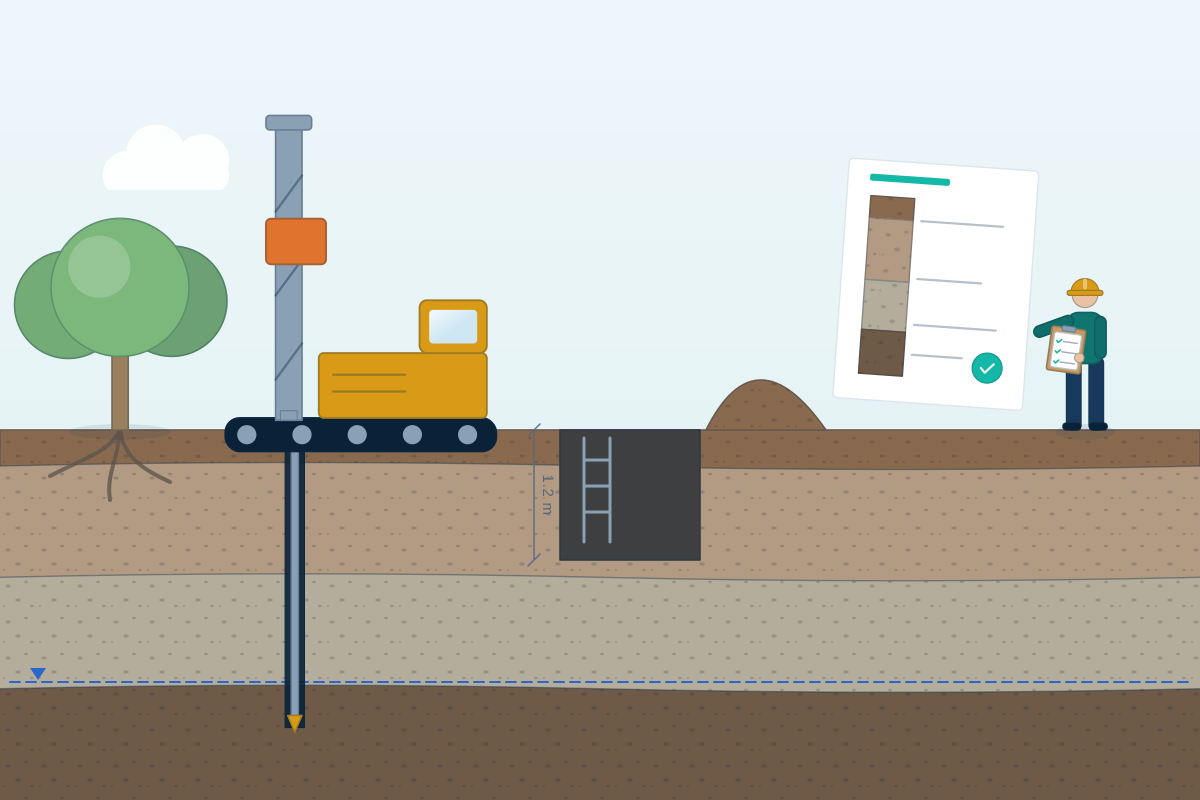
A ground investigation finds out what your building will stand on: the type and strength of the soil, how deep firm ground is, where groundwater sits, and whether there’s contamination, old mine workings or made ground from past use. It’s often needed for new homes, basements and larger extensions, on clay near trees, and on land with an industrial or uncertain history. It’s also used to investigate cracking and subsidence in existing buildings. A good specialist starts with a desk study of maps, geology and past uses, then digs trial pits or drills boreholes, tests samples in a laboratory and writes a report with clear foundation and drainage recommendations for your structural engineer.
How a professional can help
- Desk study: They review geological maps, historical land use, mining records and flood information to predict the ground conditions and spot risks before anyone digs.
- Trial pits and boreholes: They dig or drill at chosen points across the site, log each soil layer, record groundwater and take samples, using equipment suited to the access available.
- Laboratory testing: Samples are tested for strength, how much clay will shrink and swell, and chemicals that could attack buried concrete, so foundations can be designed to suit.
- Soakaway testing: They test how quickly water drains into the ground, so your drainage designer can decide whether soakaways or other infiltration drainage will work on the site.
- Contamination and ground gas: Where the land’s history suggests a risk, they test the soil and sometimes monitor ground gas, then recommend any clean-up or gas protection measures needed.
- Subsidence investigations: For existing buildings, they expose the foundations, identify the soil beneath and look for roots, helping your engineer understand the cause of movement and the repair needed.
Is this right for you?
- You’re building a new home, basement or large extension and your engineer needs soil information to design the foundations.
- Your plot is on clay with trees nearby, or the ground has been filled or built on before.
- A planning condition requires a contaminated land assessment because of the site’s previous use.
- Your house has cracking or movement and you need to understand what’s happening below ground.
- You want to know whether soakaways will work before your drainage is designed.
How the project usually runs
- Desk study and scoping: The specialist reviews the site’s history, geology and your proposals, then plans where and how deep to investigate, with input from your structural engineer.
- Fieldwork: After buried services are checked, trial pits, sampling holes or boreholes are dug or drilled, and soil samples and groundwater readings are taken.
- Laboratory testing: Samples go to an accredited laboratory for soil classification, strength and chemical testing, and for contamination testing where the site needs it.
- Interpretive report: The report describes the ground, explains the test results and recommends foundation type, depth and concrete specification, plus any drainage or contamination measures.
- Foundation design and inspection: Your structural engineer uses the report to design the foundations, and building control can refer to it when inspecting the excavations on site.
What affects the cost
- Access for machinery, since a narrow side passage or rear garden may need smaller rigs or hand digging.
- The number and depth of trial pits or boreholes that the site and the type of building require.
- The range of laboratory tests needed, especially contamination or chemical testing of soil and groundwater.
- Whether ground gas monitoring is needed over a series of return visits.
- Whether a desk study already exists, or one must be prepared before fieldwork.
- Reinstating the ground afterwards, and working around buried services, trees or existing buildings.
Ground conditions, planning conditions and building control
- Where land may be contaminated, councils often attach planning conditions requiring a staged investigation, any clean-up and a verification report before homes are occupied.
- In former coal mining areas, the council may require a coal mining risk assessment with your planning application. Your professional can check whether your site is affected.
- Building Regulations require foundations suited to the ground and protection against contaminants and moisture. The detailed rules differ between the UK nations.
- Building control can ask for deeper or different foundations on site if the ground is worse than expected, so investigating first reduces surprises.
Questions people ask
Do I need a ground investigation for a house extension?
Not always. Many domestic extensions are designed on the basis of building control inspecting the foundation trench, sometimes with a trial pit dug beforehand to check the soil and the depth of the existing foundations. A fuller investigation becomes worthwhile when there are trees on clay nearby, a slope, made ground, a basement, or real uncertainty about the soil that could change the foundation design.
What is the difference between a trial pit and a borehole?
A trial pit is a hole dug by hand or with a small excavator, letting the specialist see and sample the soil and expose existing foundations. It works well for shallow foundations. A borehole is drilled with a rig and reaches much deeper, which is needed for piled foundations, basements or where firm ground is far down. Many investigations use both.
What does a desk study tell me?
It pulls together historical maps, geological records, mining and flood information and environmental data to build a picture of the site before any digging. It can reveal old quarries, filled ground, previous industrial uses or buried structures that would change the investigation and the foundation design. For sites that may be contaminated, the council often expects a desk study as the first stage.
Can a ground investigation explain subsidence?
It helps. By exposing the foundations, identifying the soil and finding roots or signs of leaking drains, the investigation gives the engineer evidence of the likely cause, such as clay shrinking in dry weather or soil being washed away. It’s often combined with crack monitoring and a drainage survey. If you’re making an insurance claim, speak to your insurer first, as they may arrange their own investigation.
Will the specialist need to bring heavy machinery?
It depends on the depth needed and the access. Small tracked rigs and mini excavators can get through many side passages and gates, and some investigation can be done by hand. Deeper boreholes may need larger equipment. The specialist will ask about access, buried services and ground surfaces, and should explain how the ground will be reinstated afterwards.
Available across the UK
Professionals cover the whole of the UK: England, Scotland, Wales and Northern Ireland. Planning and Building Regulations differ between the four nations, and your professional will work to the rules that apply where your property is.