Build-over applications to extend over or near a public sewer
For homeowners and builders whose extension, conservatory or new building sits over or close to a public sewer. Describe your project and compare quotes from professionals who prepare build-over applications.
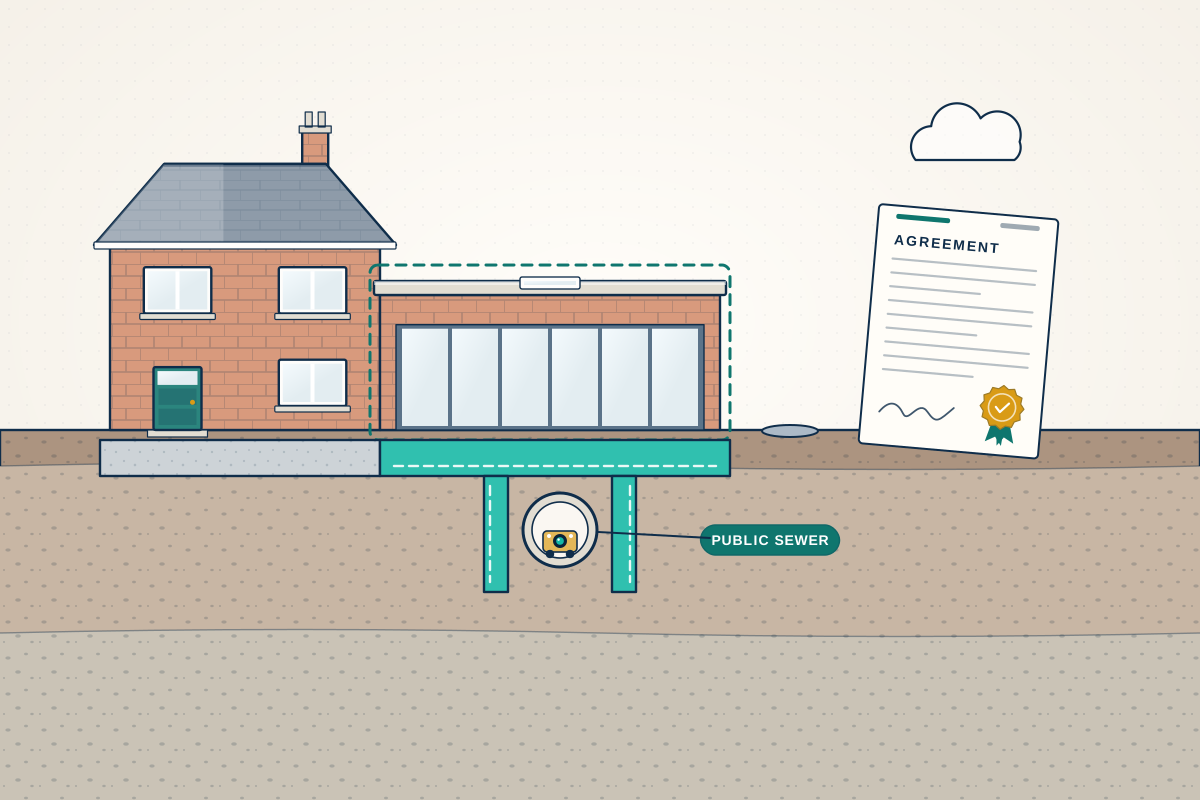
Many extensions end up near a public sewer. In England and Wales, this is often an old shared drain that now belongs to the water company and runs under several back gardens. Before building over or close to one, you usually need the water company’s agreement, and building control will expect it to be in place. A build-over application shows where the sewer is, its size, depth and condition, and how your foundations will protect it and keep it accessible for maintenance. A good professional checks the sewer records early, arranges a CCTV survey and designs around manholes and larger pipes before the layout is fixed, so you find out at the start whether building over is possible or whether the design, or the sewer, has to change.
How a professional can help
- Checking sewer records: Obtaining the water company’s sewer map, then confirming on site where public sewers and lateral drains run in relation to your planned extension.
- CCTV surveys: Arranging a camera survey of the pipe to record its route, depth, diameter and condition before work starts, which water companies often ask to see with the application.
- Foundations designed around the sewer: Working with the structural engineer on foundations taken down below the pipe, lintels or sleeves where it passes through, so the building’s weight doesn’t bear on the sewer.
- Dealing with manholes: Advising whether an existing manhole can stay where it is or needs moving outside the footprint, since water companies rarely accept access points being covered or enclosed.
- Preparing and submitting the application: Completing the water company’s forms with plans, sections and survey information, and answering their technical questions while they assess it.
- Options when building over isn’t allowed: Where the sewer is too large, too deep or in poor condition, exploring a diversion with the water company or adjusting the extension to keep clear of the pipe.
Is this right for you?
- Your sewer map or a drainage survey shows a public sewer under or beside your planned extension.
- Building control has told you water company consent is needed before they can approve your plans.
- There’s a manhole in the area where you want to build.
- You’re selling a home and the buyer’s solicitor has asked about an extension built over a sewer.
How the project usually runs
- Locate the sewer: The professional checks sewer records and lifts manhole covers to confirm the route, depth and direction of flow, as records aren’t always accurate for older shared drains.
- Survey its condition: A CCTV survey records the pipe’s size, material and condition, and any cracks, root intrusion or displaced joints that may need repairing or relining first.
- Design the protection: Foundation details, sections and any manhole changes are designed so the pipe stays protected, accessible for maintenance and capable of being repaired or replaced in future.
- Apply to the water company: The application, drawings and survey go to the water company, which may agree, ask for changes or require another solution. Some offer a simpler self-certification route for small, shallow pipes.
- Build and close out: The work is built to the agreed details. Some water companies ask for a CCTV survey after construction to show the pipe wasn’t damaged before they confirm the agreement.
What affects the cost
- Whether the sewer can be traced easily or needs extra survey work to find.
- The size, depth and condition of the pipe, and whether repairs are needed first.
- Whether a manhole needs moving or a diversion has to be designed.
- The water company’s own application and inspection charges, which are paid separately.
- Whether foundation design is included or provided by a separate structural engineer.
- Whether a CCTV survey is needed after construction as well as before.
Water company consent and Building Regulations
- In England and Wales, Building Regulations cover building over or near drains and sewers, and building control consults the water company.
- Water company consent is separate from planning permission and Building Regulations approval; having one doesn’t cover the others.
- In Scotland and Northern Ireland, a single public water body owns the sewers and sets its own rules for building close to them.
- Building over a public sewer without consent can cause problems when you sell, and the water company keeps its right of access to the pipe.
Questions people ask
How do I know if there’s a public sewer near my extension?
Your water company holds sewer records, and you can request a sewer map, either directly or through a property search. Records aren’t always complete, especially for older shared drains, so a professional usually checks on site by lifting manhole covers or arranging a CCTV survey.
What if my extension has already been built over a sewer?
Many water companies accept retrospective applications. They may ask for a CCTV survey to show the pipe wasn’t damaged and can still be maintained. This often comes up when selling a home, and a professional can prepare the application and gather the evidence the water company needs.
Can I build over a manhole?
Usually not. Water companies generally won’t allow manholes on public sewers to be covered or enclosed inside a building, because they need access for maintenance and emergencies. The manhole may need moving outside the extension footprint, which needs the water company’s approval and careful design.
What if the water company says no?
The usual options are redesigning the extension to keep clear of the sewer, or diverting the sewer around the building. A diversion needs the water company’s agreement and is normally designed and paid for by the person who wants to build. Your professional can compare the options with you.
Is a build-over agreement the same as Building Regulations approval?
No. Building Regulations approval comes from building control, while a build-over agreement or consent comes from the water company that owns the sewer. Building control may not sign off the work until the water company is satisfied, so the two usually run side by side.
Does it matter if the pipe is a shared drain from next door?
Yes. In England and Wales, drains that serve more than one property are often public sewers now, even where they run under private gardens and don’t appear on older records. That can bring them into the build-over process, so it’s worth checking early.
Available across the UK
Professionals cover the whole of the UK: England, Scotland, Wales and Northern Ireland. Planning and Building Regulations differ between the four nations, and your professional will work to the rules that apply where your property is.