Get the tree survey and arboricultural report your planning needs
For homeowners, self-builders and developers with trees on or near the site. Compare quotes from arboricultural consultants who can survey the trees, show how to protect them and support your application.
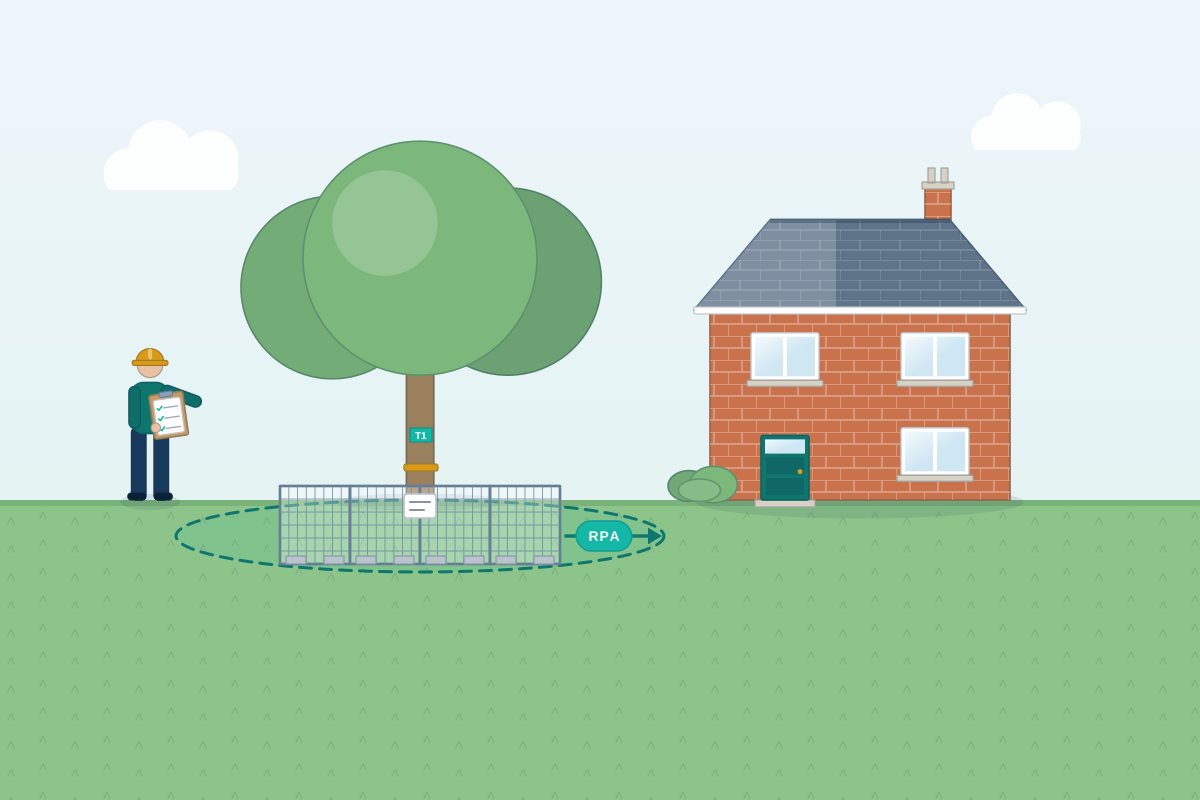
An arboricultural report explains how trees on or near your site affect what you want to build, and how those trees will be protected. Councils often ask for one when an extension, new home or driveway is close to trees, including trees in a neighbour’s garden or on the street. It usually follows British Standard BS 5837: the arboricultural consultant surveys and grades each tree, maps its root protection area, assesses the impact of your design and sets out how the trees will be protected during the build. A good consultant gets involved early, before the layout is fixed, so the design can work around the most valuable trees rather than fight them.
How a professional can help
- Tree survey and categorisation: They record the species, size, condition and remaining life of each relevant tree, and grade it by quality, so you and the council know which trees matter most to keep.
- Root protection areas: They calculate the area around each tree where roots must not be damaged and plot it on a scaled plan with your proposed building, so conflicts show up before the design is fixed.
- Arboricultural impact assessment: They explain which trees would need to be removed or pruned, how construction could affect the rest, and what replacement planting could make up for any losses.
- Method statement and tree protection plan: They set out where protective fencing and ground protection go, how foundations, drainage and services can be built near roots, and the order in which work should happen.
- Protected trees and council consent: Where a tree preservation order or conservation area applies, they can prepare the application or notice for tree works and explain the reasons for the work to the council’s tree officer.
- Supervision during the build: If planning conditions require it, they visit at key stages, check the fencing is in place and record that any work inside root protection areas was carried out as agreed.
Is this right for you?
- Your council’s validation checklist or planning officer has asked for a tree survey or arboricultural report.
- You want to build an extension, garden room, new home or driveway close to trees, including trees just over the boundary.
- A tree on or near your property is covered by a tree preservation order or stands in a conservation area.
- You’re buying a plot or garden land and want to know how trees will limit where and how much you can build.
- Your insurer, lender or surveyor has raised concerns about a large tree close to the house.
How the project usually runs
- Tree survey: The arboricultural consultant visits the site, ideally with a topographical survey showing tree positions, and records every tree that could be affected, including those on neighbouring land.
- Constraints plan for the design: They produce a tree constraints plan showing root protection areas and canopy spread, which your designer uses to position the building, access, parking and services.
- Impact assessment with the application: Once the layout is settled, they assess its effect on the trees and prepare the report that is submitted with your planning application.
- Method statement and conditions: The council may attach conditions requiring a detailed method statement and tree protection plan, which must be approved before any work starts on site.
- Protection during construction: Fencing and ground protection go up before demolition or groundwork begins and stay until the build is finished, with site visits where the conditions call for them.
What affects the cost
- How many trees need surveying, and whether they’re scattered across a large site or grouped along one boundary.
- Whether you need a survey only, or the full set of impact assessment, method statement and tree protection plan.
- Whether an accurate topographical survey with tree positions already exists, or the consultant has to locate the trees themselves.
- How close the building, driveway or drainage runs come to root protection areas, and whether special foundations or no-dig surfacing must be specified.
- Whether planning conditions require supervision visits during construction, and how many stages they cover.
- Whether extra investigation is needed, such as decay testing on a large tree or digging to find roots near proposed footings.
Tree preservation orders, conservation areas and planning
- Work to a tree covered by a tree preservation order usually needs the council’s consent first, and unauthorised work can lead to prosecution.
- Across the UK, you normally have to give the council advance notice before cutting down or pruning most trees in a conservation area, though the procedure differs between nations.
- Councils commonly attach tree protection conditions to planning permissions, and these must be met before work begins on site.
- Bats and nesting birds can use trees, so felling may need an ecology check as well as any tree consent.
Questions people ask
Do I need a tree survey for a house extension?
Not always. Many councils ask for one when a tree on your land or a neighbour’s land is close enough for the building, scaffolding or foundations to affect its roots or canopy. Check your council’s validation checklist, or send photos and a site plan to an arboricultural consultant, who can usually tell you whether a report is likely to be needed and what level of detail the council expects.
What is a root protection area?
It’s the area around a tree containing the roots most important to its survival, calculated under BS 5837 from the trunk size and adjusted for site conditions. Building, digging, storing materials or changing ground levels inside it can harm the tree, so the report shows how to keep work out of it, or which special construction methods to use where that isn’t possible.
Can I build near a tree with a tree preservation order?
Sometimes, if the design protects the tree. Foundations can be designed to bridge over roots, paths and driveways can be built up rather than dug down, and the layout can be shifted. The council will judge whether the tree is adequately protected, and a clear arboricultural report gives it the information to do that. Removing or pruning a protected tree needs consent unless an exemption applies, and your consultant can explain which exemptions are relevant.
Can trees near the house affect foundations?
Yes, particularly on shrinkable clay, where trees draw moisture from the ground and can cause movement, and where removing a large tree can let the ground swell back. Your structural engineer will usually design foundations with this in mind, using the species, height and distance of each tree from the arboricultural survey together with soil test results from a ground investigation.
Will an old tree survey still be accepted?
Trees grow and change, and councils expect tree information to reflect the site as it is now. If your survey was done some time ago, or there have been storms, felling or building work nearby since, the consultant may need to revisit and update it before your application goes in. Ask them whether your existing survey can be reused.
Available across the UK
Professionals cover the whole of the UK: England, Scotland, Wales and Northern Ireland. Planning and Building Regulations differ between the four nations, and your professional will work to the rules that apply where your property is.