Piling or digging deep next to a neighbour? Get the notices right
For anyone in England and Wales planning piled foundations, a basement or a deep dig close to a neighbour, and for neighbours who have been served a notice. Compare quotes from party wall surveyors.
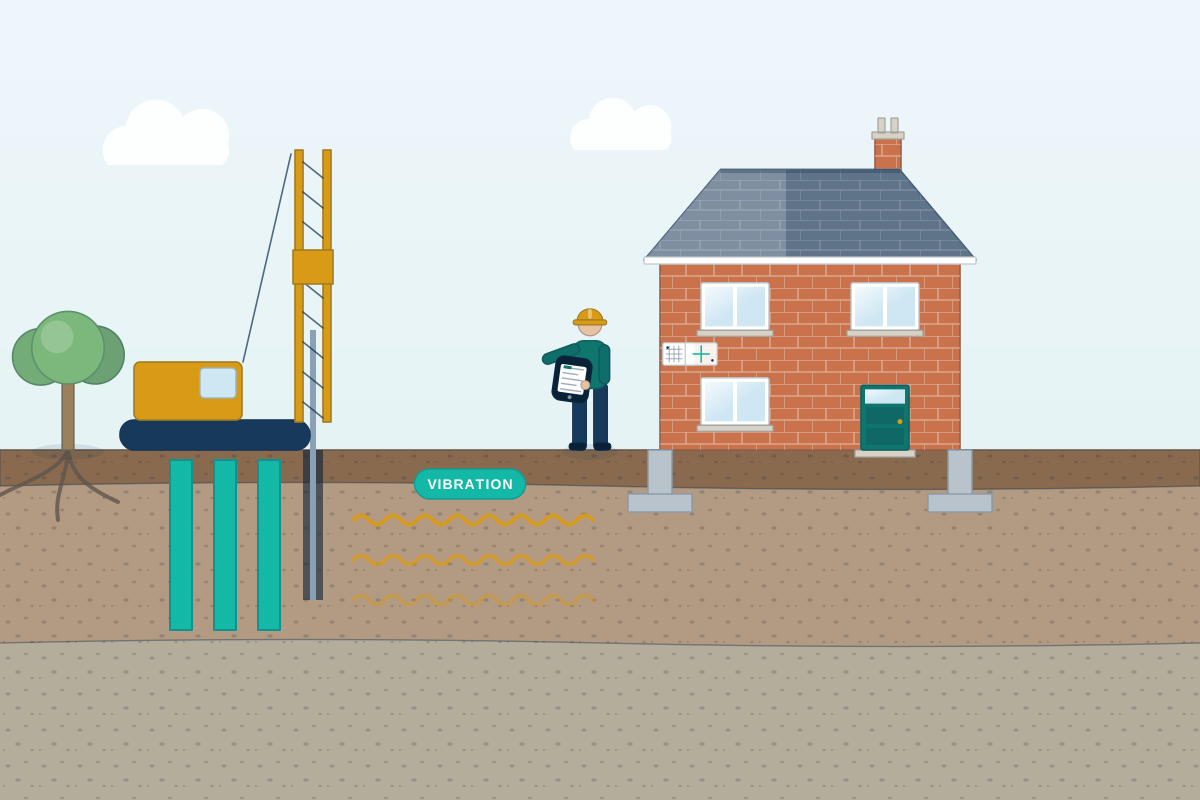
Piles are columns driven or drilled deep into the ground to carry a building. Piling and deep digging affect the ground beside your site as well as under it. In England and Wales, the Party Wall etc. Act 1996 requires a notice of adjacent excavation, a notice about digging near a neighbour’s building, when you dig or build foundations within three metres of it and deeper than its foundations. The distance is six metres if the work falls inside an imaginary line sloping down at 45 degrees from the bottom of the neighbour’s foundations. Your surveyor checks which test applies, serves the notice at least a month ahead and agrees an award, the surveyors’ written agreement, covering the piling method, monitoring and working hours.
How a professional can help
- Checking whether your scheme triggers a notice: They compare pile positions and excavation depths with the neighbour’s building and foundations, then confirm whether the three-metre or six-metre test applies, so the right notice is served and nothing is missed.
- Preparing the notice with plans and sections: The notice shows the site and the depth of the digging or foundation, and states whether you propose to underpin or strengthen the neighbour’s foundations. They prepare it and serve it on every owner affected.
- Agreeing the piling method: They ask your engineer and piling contractor why a method was chosen, such as drilled piles, which usually shake the ground less than driven ones, and write the method, rig and working hours into the award.
- Monitoring the neighbour’s building: Monitoring points go on the neighbour’s walls and are read before the rig arrives, while it works and after it leaves. The award sets the reading at which work pauses while the engineer checks what it means.
- Protecting the neighbour’s foundations: If your digging could undermine next door’s foundations, they review the engineer’s proposals for supporting or underpinning them. Where the work makes this necessary, the Act generally expects the building owner to bear the cost.
- Rig access, noise and dust: They set days and hours for the rig and deliveries, dust and noise controls, and the route in for large plant, including any need for a licence if a crane or boom will swing over next door.
Is this right for you?
- You’re planning a basement, lift pit or deep foundations close to a neighbour’s house or boundary.
- Your engineer has specified piled or mini-piled foundations because of clay, trees or poor ground.
- You’ve been served a notice of adjacent excavation and want to understand vibration and what protection you can ask for.
- You’re a developer or self-builder on a tight plot and need the notice period built into your programme.
How the project usually runs
- Ground investigation and foundation design: A structural engineer, with a ground investigation where needed, decides the pile type, depth and layout, or the depth of the dig and how its sides will be held up. Nothing is dug until that design exists.
- Notice of adjacent excavation: The notice goes to each affected owner at least one month before the work starts, with plans and sections. If they consent in writing, you can proceed on those terms. If they object, or stay silent for 14 days, surveyors are appointed.
- Surveyors, schedule and method statement: Surveyors are appointed and record the neighbour’s building. They review the method statement, which is the written plan for the rig type, working hours and how vibration and ground movement will be watched.
- The award and monitoring set-up: The award fixes the method, hours, monitoring points, the reading at which work pauses and who pays, and says what protection next door gets. Monitoring equipment goes in and a first set of readings is taken before the rig arrives.
- Work, readings and close-out: Piling or digging goes ahead while the readings are reviewed. At the end, the surveyors go back to next door, check it against the first record and agree any repairs.
What affects the cost
- How close the piles or excavation are to the neighbour’s building, and how deep they go compared with its foundations.
- How many properties fall within the three-metre and six-metre zones.
- The monitoring the award requires, including the number of points, how often they are read and for how long.
- Whether the neighbour appoints their own surveyor and engineer to review the method.
- Any extra input from the structural engineer, such as a ground movement assessment for a basement.
- Whether support or underpinning is needed for the neighbour’s foundations.
Notices, approvals and what differs across the UK
- The Party Wall etc. Act 1996 applies in England and Wales only. In Scotland and Northern Ireland different rules apply, though surveyors can still help on sites anywhere in the UK.
- A notice of adjacent excavation is served at least one month before the work starts. The three-metre and six-metre tests depend on the depth of the neighbour’s foundations, which may need to be checked on site.
- Piles and deep excavations need an engineer’s design for building control, or a building warrant in Scotland, and some councils ask for ground or basement assessments before they grant planning permission.
- Planning permission and building control approval do not replace party wall notices.
Questions people ask
How close to my neighbour counts as adjacent excavation?
There are two tests. The first is within three metres of the neighbour’s building and deeper than its foundations. The second is within six metres, if the work falls inside a line sloping down at 45 degrees from the bottom of those foundations. Your surveyor works out which applies from the drawings and what is known about next door’s foundations.
Is piling likely to shake next door?
Piling sends vibration through the ground, which is why the method matters. Drilled piles usually cause less than driven ones. Engineers and surveyors agree the method, set up monitoring and fix the level at which work pauses for checks. A schedule of condition is recorded first, so any later claim can be judged fairly.
How long should I allow before the piling rig can arrive?
A notice of adjacent excavation must be served at least one month before the work starts. The neighbour has 14 days to reply, and if they object, surveyors must be appointed and an award agreed first, which takes longer. Build the notice period, and some time beyond it, into your programme and your piling contractor’s booking.
Who pays if the neighbour’s foundations need protecting?
Where your digging makes protection necessary, such as underpinning or strengthening next door’s foundations, the Act generally makes that the building owner’s cost. Surveyors’ reasonable fees normally fall on the building owner too. A surveyor can tell you early which parts of your scheme could trigger this.
Do I need anything else in place before the rig arrives?
Usually. The engineer’s design normally goes to building control, or for a building warrant in Scotland, and a ground investigation may be needed first. If a crane or long boom will swing over next door, a separate licence from the neighbour is needed. None of these replaces the notice, so line them all up early.
Available across the UK
Party wall surveyors cover the whole of the UK. The Party Wall etc. Act 1996 applies in England and Wales; Scotland and Northern Ireland have different rules, and a professional can tell you what applies to your property.
- Get free quotes
- Party Wall for Underpinning a Party Wall
- Notices of Adjacent Excavation
- Piled and Mini-piled Foundations
- Vibration Monitoring Near Construction
- Party Fence Walls
- Party Wall for Basements
- Party Wall for Beams and Padstones Cut Into the Wall
- Party Wall for Chimney Breast Removal
- Party Wall for Demolishing Shared Structures
- Party Wall for Loft Conversions
- Party Wall for New Builds on the Boundary
- Party Wall for Raising or Rebuilding a Party Wall
- All services
- Find your area