Fix failing wall ties and bulging walls with an engineer’s design
For owners of cavity-wall homes with rusting ties, cracked mortar joints or a wall that has started to bulge. Describe the signs and compare quotes from structural engineers who survey ties and design the repair.
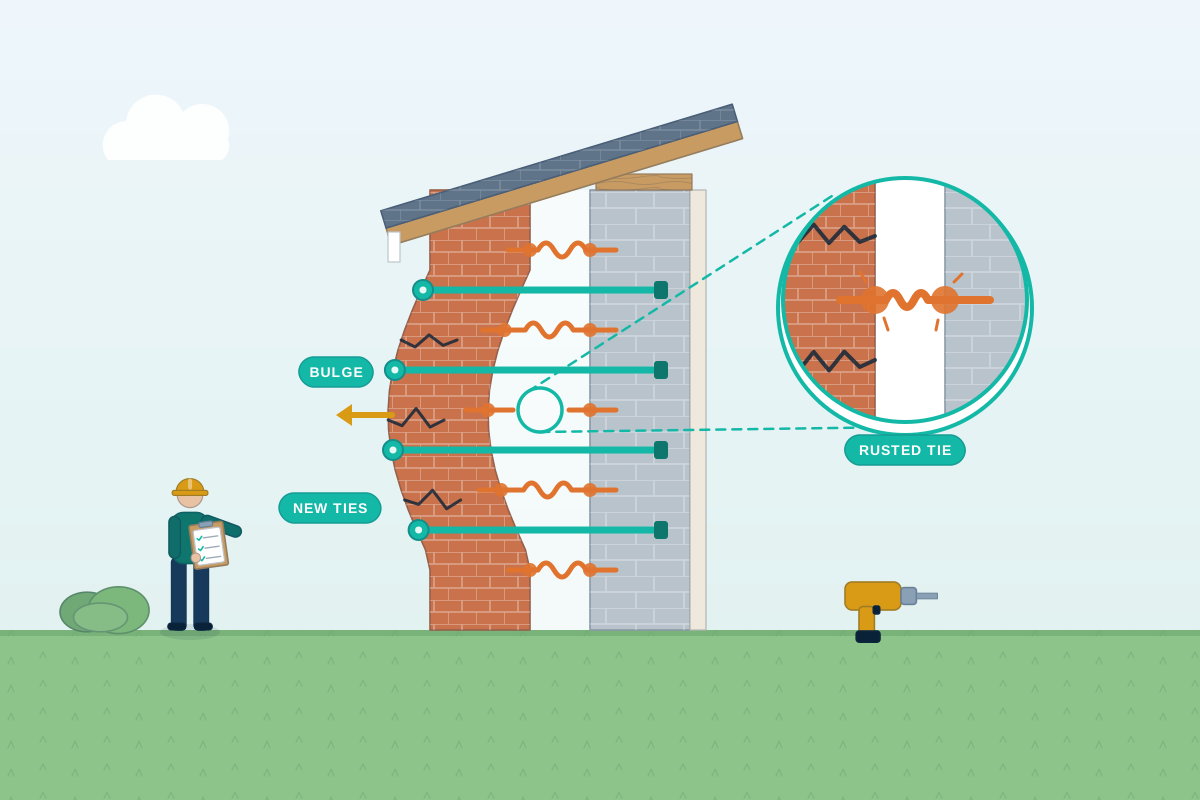
A cavity wall has an outer brick layer and an inner wall with a gap between them, and metal ties hold the two together. In older homes, often those built before the 1980s, steel ties can rust, and the rust can swell and crack the mortar joints in horizontal lines. Ties can also be missing, too few or poorly fixed. When too many fail, the outer layer can bow outwards and, in time, become unsafe. A structural engineer finds out what is happening, usually by inspecting the ties with a small camera through holes in the mortar joints. They then design replacement ties, extra strapping and any rebuilding needed.
How a professional can help
- Surveying the ties: They arrange a sample inspection with a borescope (a small camera) through holes drilled in the mortar joints. They record the type and condition of the ties, and how well the two layers of wall are connected, at points around the building.
- Reading the warning signs: Horizontal cracks along mortar joints, bulging brickwork, gaps at window frames and rust marks can all point to tie failure. They separate these from other causes of cracking, such as foundation movement.
- Designing the replacement ties: They specify the type of replacement tie, how many are needed in each area and how close to openings, corners and roof level, so the outer leaf is properly held back. Fixings depend on the inner leaf.
- Repairing a wall that already bulges: Where the outer layer has moved out of line, they say whether it can be pinned back with ties, needs local rebuilding or must come down. They design any temporary support while that work is done.
- Strapping gables and roofs: They check that gable (end) walls and the roof are strapped to the walls, so nothing pushes a wall outwards. Where straps or anchors are missing or have perished, they specify new ones.
- A clear scope for the installer: They provide a written scope and marked-up drawings of each wall, so tie installers can price like for like. They can also give a closing letter confirming the work for buyers, lenders or insurers.
Is this right for you?
- You can see horizontal cracks every few rows of brick, or the brickwork has started to push out of line.
- A homebuyer survey or mortgage lender has flagged possible wall tie failure and you need an engineer’s view.
- You own a house or block of flats with cavity walls built before the 1980s and want the ties checked.
- A contractor has quoted for wall tie replacement and you want an independent opinion on whether it is needed.
How the project usually runs
- Inspect the walls: The engineer looks at the walls from outside and inside, noting cracking patterns, bulges, rust stains and any previous tie work, and asks when the signs first appeared.
- Survey the ties: Small holes are drilled in mortar joints and a borescope is used to check the ties and the cavity at selected positions, usually on each side of the building and at the worst-affected areas.
- Replacement tie design: The engineer sets out which walls need new ties, how they are laid out, where extra strapping is needed and whether any bulging sections need rebuilding.
- Ties fitted and checked: Specialist installers fix the new ties and make good the holes. The engineer can check samples, and any bulging wall is supported while it is being worked on.
- Closing report: A short report confirms what was found and what was done, so you hold the records for future buyers, lenders or insurers.
What affects the cost
- The size and height of the walls, and how many sides of the building need new ties.
- Whether the problem is local, such as one gable end, or found right around the building.
- Whether bulging sections need to be rebuilt, supported with temporary props or only pinned back.
- Scaffolding or access equipment needed for tall or awkward walls.
- Whether cavity insulation was added later, which can make surveying and installing ties more involved.
- The finishes to be made good afterwards, such as pointing, render or painted brickwork.
Rebuilding, consents and shared walls
- Replacing ties is repair work and rarely a planning matter, but rebuilding a bulging wall can be controlled building work. Ask building control, or let your engineer confirm what applies.
- Listed buildings and some conservation areas need consent for work that changes the appearance or fabric of the walls, including repointing and rebuilding in a different material.
- Building Regulations, building warrants and heritage rules differ across England, Scotland, Wales and Northern Ireland. Structural engineers cover the whole UK and work to the local rules.
- In England and Wales, work to a wall shared with a neighbour, such as rebuilding part of a party wall, can fall under the Party Wall etc. Act 1996.
Questions people ask
What are the signs of wall tie failure?
Horizontal cracks in the mortar along the line of the ties, often every few rows, are a common sign, along with bulging or outward-leaning brickwork, rust stains and sometimes cracks near corners. The signs can have other causes, so an engineer’s inspection checks the ties themselves before recommending any work.
Do all my ties need replacing?
Not necessarily. A survey samples the ties around the building to see how widespread the problem is. Sometimes only one side or section needs work. In other cases the ties are found to be sound, or the cracking has another cause. Surveying first shows whether the work is needed at all.
Is a bulging wall dangerous?
It can be, because the outer brick layer is no longer properly held to the inner wall. Get it checked promptly. Keep people and vehicles away from the foot of the wall, and ask an engineer to inspect it before any work is done. If it is moving or looks close to collapse, call the emergency services. Many bulging walls can be repaired once they have been assessed.
Can replacement ties be fitted if the cavity has insulation?
Often, yes, but the insulation makes the survey and the work more involved, and the installer needs to allow for it. Tell your engineer if insulation was injected or fitted later, because it affects how the ties are inspected and fixed, and sometimes what the right repair is.
Why do wall ties rust?
Many older ties are plain or thinly coated steel. Damp in the cavity, wind-driven rain and coastal air can all speed up rust over the years. Replacement ties are made from stainless steel or another material that resists corrosion, and your engineer will say which suits your walls and the exposure of your site.
Available across the UK
Professionals cover the whole of the UK: England, Scotland, Wales and Northern Ireland. Planning and Building Regulations differ between the four nations, and your professional will work to the rules that apply where your property is.
- Get free quotes
- Bowing, Leaning and Bulging Wall Assessments
- Wall Stitching and Crack Repair Design
- Structural Surveys and Condition Reports
- Temporary Works and Propping Design
- Concrete Repair and Reinforcement Corrosion
- Period Property and Conservation Structural Repairs
- Strengthening Existing Floors, Roofs and Walls
- Subsidence Repair Design
- Timber Floor and Roof Repair Design
- All services
- Find your area