Alter or extend your listed building with the right consents
For owners of listed homes and commercial buildings planning repairs, alterations or extensions. Compare quotes from professionals experienced in historic buildings and listed building consent.
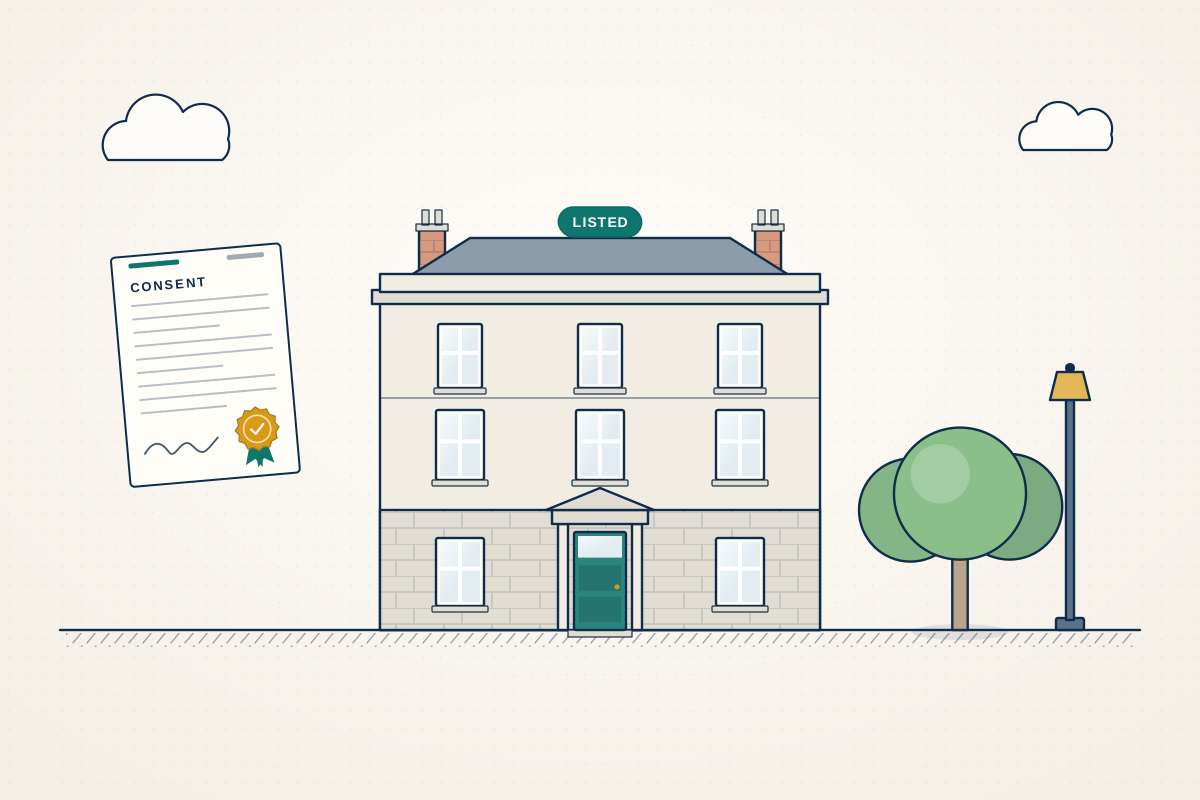
Listing protects buildings of special architectural or historic interest. It normally covers the whole building, inside and out, not just the front, and can extend to fixtures and some structures within its grounds. Works that would affect its character, including many internal alterations, need listed building consent, in addition to any planning permission. A good professional starts by understanding what makes your building significant, then designs changes that respect it: reversible where possible, using suitable materials and keeping historic fabric. They explain the reasoning in a heritage statement and work with the council’s conservation officer towards an acceptable scheme.
How a professional can help
- Understanding significance: They research the building’s history and list entry, examine its fabric and identify which parts matter most, which shapes what can change and what should stay.
- Sensitive design: They design alterations and extensions that respect the building’s character, scale and materials, favouring repair over replacement and reversible changes over permanent ones.
- Heritage statements and consent applications: They prepare the drawings, schedules of work and heritage statement that explain the proposals and their impact, and submit the listed building consent application, with a planning application where needed.
- Working with the conservation officer: They discuss proposals with the council’s conservation officer, ideally before applying, and refine details such as joinery, mortar, finishes and junctions towards an approach the council can support.
- Specifying traditional repairs: They specify suitable methods, such as lime mortars and plasters, breathable finishes and like-for-like timber repairs, and explain where modern materials could damage the building.
- Energy upgrades that suit old buildings: They look at measures such as secondary glazing, draught-proofing and insulation that work with how a traditional building handles moisture, and check which of them need consent.
Is this right for you?
- You own a listed home and want to extend it, rework the layout, or update a kitchen or bathroom.
- You’re buying a listed building and want to understand which changes are realistic before you commit.
- Previous owners made changes and you’re not sure whether they had listed building consent.
- You want to improve comfort and energy efficiency without harming the building’s historic character.
How the project usually runs
- Research and survey: Your professional reads the list entry and historic records, then surveys the building, recording its fabric, phases of change and condition in detail.
- Significance and options: They set out what is significant and how sensitive each part is, then develop design options that meet your needs while limiting harm to historic fabric.
- Pre-application discussion: Proposals are discussed with the conservation officer, and sometimes with national heritage bodies, before applying, so that concerns can be resolved early.
- Consent applications: The listed building consent application, and any planning application, goes in with drawings, a heritage statement and method statements. Conditions often require samples or details to be approved later.
- Detailed specification and works: Once consent is granted, the details required by conditions are submitted, specialist contractors are appointed and the work is overseen so it matches what was approved.
What affects the cost
- The grade or category of listing, the age and complexity of the building and how much historic fabric is affected.
- How much historical research, recording and measured survey the building needs.
- Whether specialist input is needed, such as a structural engineer experienced in historic buildings, or archaeological recording.
- The number of conditions, samples and detailed drawings the council requires after consent.
- Whether the project also needs planning permission, Building Regulations approval or work to outbuildings and garden walls.
- How closely you want your professional to oversee specialist contractors during the work.
Listed building consent and the law
- Carrying out works that affect a listed building’s character without consent can be a criminal offence, and in England and Wales there’s no time limit on the council requiring them to be put right.
- Listing uses grades in England and Wales, categories in Scotland and its own grades in Northern Ireland, but consent is needed whatever the grade.
- Planning permission may also be needed, and councils consider the setting of a listed building when assessing work nearby.
- Building Regulations still apply, but building control can take a balanced approach with historic buildings, for example on energy efficiency.
Questions people ask
Do I need listed building consent to replace windows?
Usually, yes. Historic windows are often part of a building’s significance, and replacing them, even with close copies, normally needs consent. Repairing them, or adding secondary glazing on the inside, is often more acceptable, though secondary glazing can need consent too. Talk to your professional or the conservation officer before ordering anything.
Does listing cover the inside of the building?
Yes. Listing applies to the whole building, including interior features such as staircases, fireplaces, plasterwork, doors and floor structures, unless the list entry expressly excludes them, as some newer entries in England do. Many list descriptions were written mainly to identify the building and aren’t a complete record of what’s protected, so don’t assume an unmentioned feature can be removed.
Can I build an extension on a listed house?
Often, yes, if it’s designed with care. Councils tend to favour extensions that are clearly subordinate, sit in less sensitive positions and connect to the original building with minimal loss of historic fabric. Contemporary designs can be acceptable as well as traditional ones. You’ll usually need both listed building consent and planning permission.
Can I add insulation or double glazing to a listed building?
Some energy improvements are possible, but they need care. Traditional buildings rely on breathable materials, and the wrong insulation can trap moisture and cause decay. Draught-proofing, secondary glazing, loft insulation and more efficient heating are often acceptable, sometimes without consent. Slim double glazing is considered case by case. Your professional can advise what suits your building and what needs consent.
What happens if earlier owners altered the building without consent?
The council can require unauthorised works to be reversed even if you didn’t carry them out, as the duty to put them right can pass with the building. A professional can review what has been done, advise whether retrospective consent is realistic and help you deal with the council. If you’re buying, raise it through your solicitor before you exchange.
Available across the UK
Professionals cover the whole of the UK: England, Scotland, Wales and Northern Ireland. Planning and Building Regulations differ between the four nations, and your professional will work to the rules that apply where your property is.
- Get free quotes
- Heritage Statements
- Heritage and Conservation Architects
- Period Property Renovation
- Measured Building Surveys
- Change of Use
- Conservation Area Projects
- Design and Access Statements
- Discharge of Planning Conditions
- Full Planning Applications
- Householder Planning Applications
- All services
- Find your area